
Common Curriculum
Responding to a culture in flux
9 credits
5 hands-on labs
2 intersecting degree programs
We live in an age of globalization and fragmentation, hyper-connectivity and deep disconnection, ever-advancing technology and declining empathy. What do transforming relationships look like in this complex time?
We are a community of deeply present practitioners, responding to an activated society. Our commitment to text.soul.culture is at the core of our curriculum and cultivates the skills required to carry out the sacred work of tending to a fragmented society.
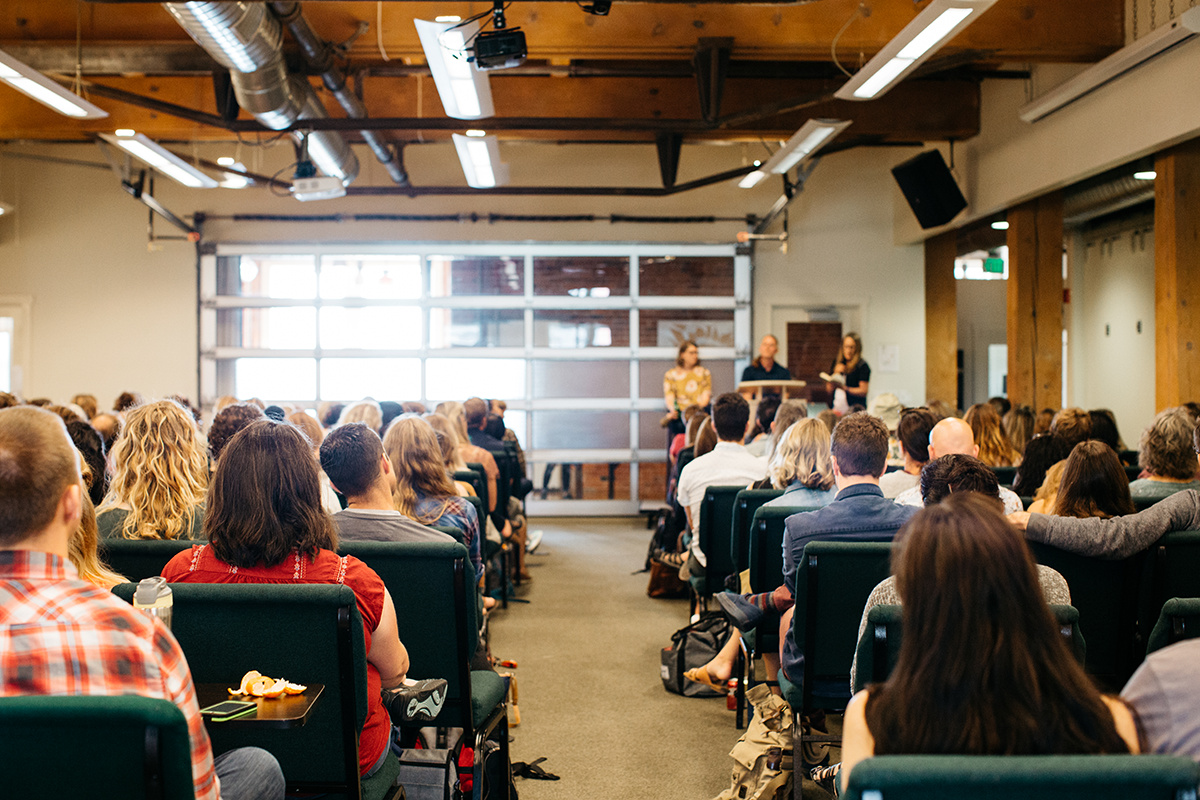
Now more than ever, the world needs light-bringers, truth-tellers, and change-makers in the form of pastors, therapists, social leaders, and artists to join God in the restoration of their communities. Come learn with us!
Interdisciplinary study is what makes learning at The Seattle School unique. Our Common Curriculum is a shared, year-long formation experience for students in our MA in Theology & Culture and MA in Counseling Psychology programs designed to develop thoughtful, adaptive leaders and practitioners. Our curriculum brings multiple disciplines and perspectives together for the sake of engaging the complex challenges in the world today and the nuanced matters of the heart with wisdom and care.

Through this common curriculum, you will:
- Form a foundational self-understanding of what it means to be an intentional presence in the world.
- Explore the central questions which guide the disciplines of theology and psychology and the way they mutually influence both personal and societal well-being.
- Develop and apply deep listening skills in service of understanding text, self, others, and the Divine.
- Articulate a vision of human flourishing informed by cross-disciplinary inquiry and self-reflection.
“At the crux of our Common Curriculum is the desire to help our learners to have a robust curiosity and growing understanding of God, neighbor, and the space between. We aim to make the implicit explicit through experiential learning for the sake of embodied practice.”
Dr. Doug Shirley, Associate Professor of Counseling Psychology
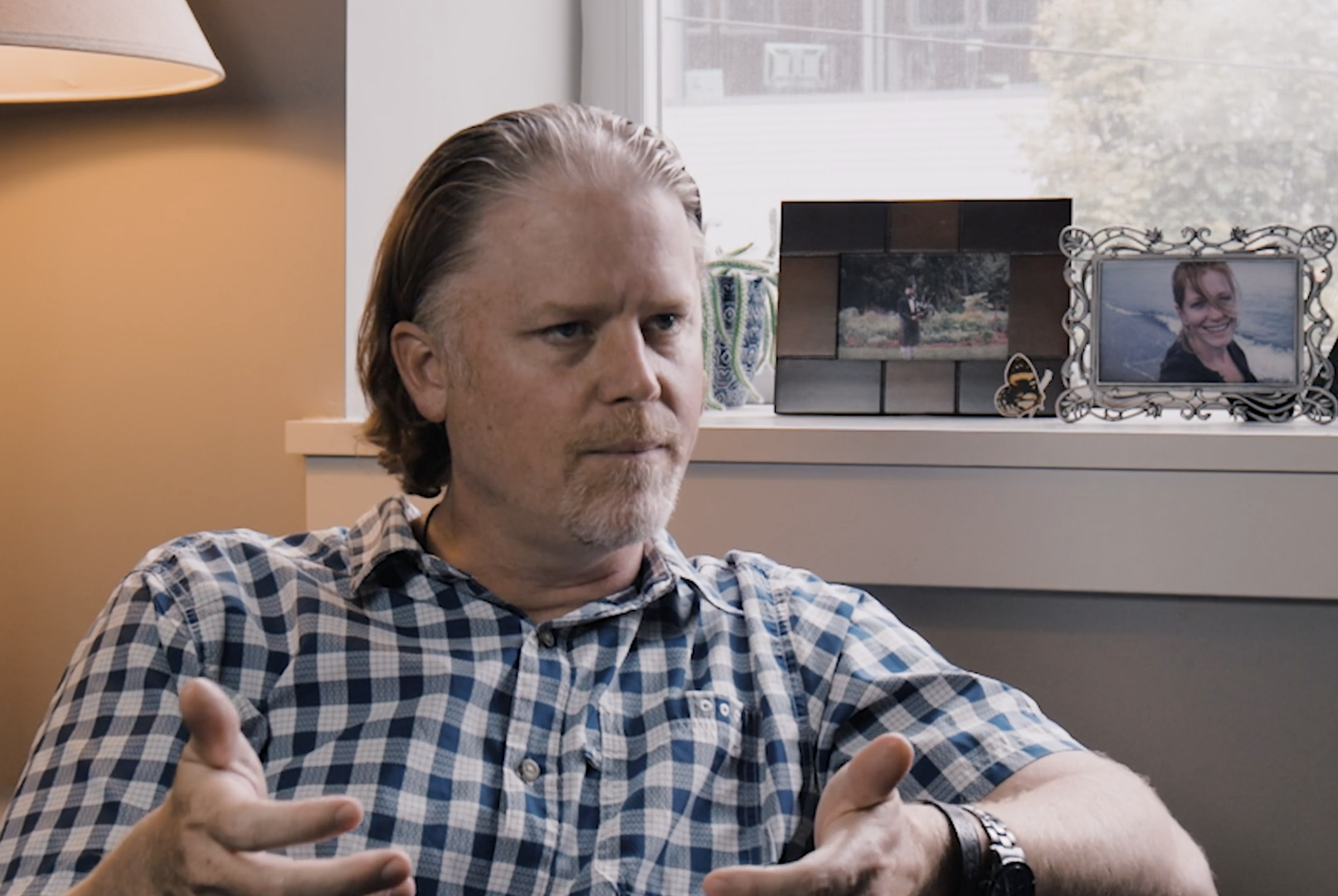
Common Curriculum at The Seattle School
Gaining expertise in a discipline provides a lens, but any lens has affordances and constraints. Interdisciplinary learning invites you to develop multiple lenses, allowing you as the practitioner to take up multiple lenses to see and engage the world. In this critical first year of study, students explore the central questions within, and interplay between, the disciplines of theology and psychology, and they begin to cultivate deep listening skills in service of understanding text, self, others, and the Divine. Throughout the common curriculum, students will develop a foundational self-understanding of what it means to be an intentional presence in the world and form a compelling vision and praxis for human flourishing, a foundation which will undergird students’ vocational development and their ongoing work in service of God and neighbor. You can view more in-depth course descriptions here.
Fall
IDS 501 Intersections: Interdisciplinary Inquiry & Psychological Frameworks | 2 credits
IDS 504 Critical Reading Lab | 1 credit
IDS 520 Listening Lab (Part I) | 1 credit
During your first term, you will explore interdisciplinary perspectives on complex problems that affect and reveal the human condition through a complementary course and lab course. In the IDS 501 lecture course, students will be introduced to the realm of interdisciplinary inquiry with psychology as the primary lens. Students will explore and articulate conceptions of personhood and the self, drawing from psychological theories, personal histories, and social location. Through reflective exercises, students will examine the nature of the self in their own lived experiences. In the complementary seminar-style IDS 504 Critical Reading Lab, students and a faculty facilitator will explore what it means to know and to learn, particularly as it relates to interdisciplinary and integrative work. The guiding questions will be: How do we know what we know, and how do we practice what we know? What kinds of assumptions and biases do we bring into our own reading and learning? IDS 520 Listening Lab is an experiential, relational space that takes place over two terms. It is designed to cultivate deep listening, emotional intelligence, capacity for self-reflection, and thoughtful vulnerability through the sharing of stories, listening to others, and attending to the group.
Winter
IDS 502 Intersections: Biblical Traditions & Theological Formations | 2 credits
IDS 505 Contextual Learning Lab | 1 credit
IDS 521 Listening Lab (Part II) | 1 credit
During your second term, you will explore interdisciplinary perspectives on complex problems that affect biblical interpretive traditions and theological formations. In the IDS 502 lecture course, you will engage real-world implications of the doctrine of God, the incarnation of God in Jesus Christ, and the Holy Spirit from an interdisciplinary framework of theology, psychology, and biblical studies. The IDS 505 Contextual Learning Lab will ground interdisciplinary inquiry within the reality of your everyday life, giving you the opportunity to listen as a storied, located, and bodied human being, providing skills for ways of loving God and neighbor within your place’s ecosystem unto the common good. You’ll also continue growing your skills in deep listening in IDS 521 Listening Lab (Part II).
Spring
IDS 503 Intersections: Textual Integrations | 1 credit
The work of the third term is an invitation to synthesize your learning from your first year Common Curriculum experience. In IDS 503,you will write a culminating capstone paper, where you will engage the question of what it means to be a human person flourishing, and bring together your accumulated research, reading, and annotated bibliographies from the IDS 501 & 502 courses. This writing is an opportunity to dig deeper and grow in your academic writing skills with faculty advising and peer-to-peer collaboration. The capstone serves as an important foundation for your ongoing vocational development within your program.
I think the work of engaging relationships through the lens and the possibility of transformation helps us see that another way might be possible, that we might actually become more truly ourselves when we figure out what it means to encounter someone in close loving relationship
Seth Tomas, MDiv Alumnus
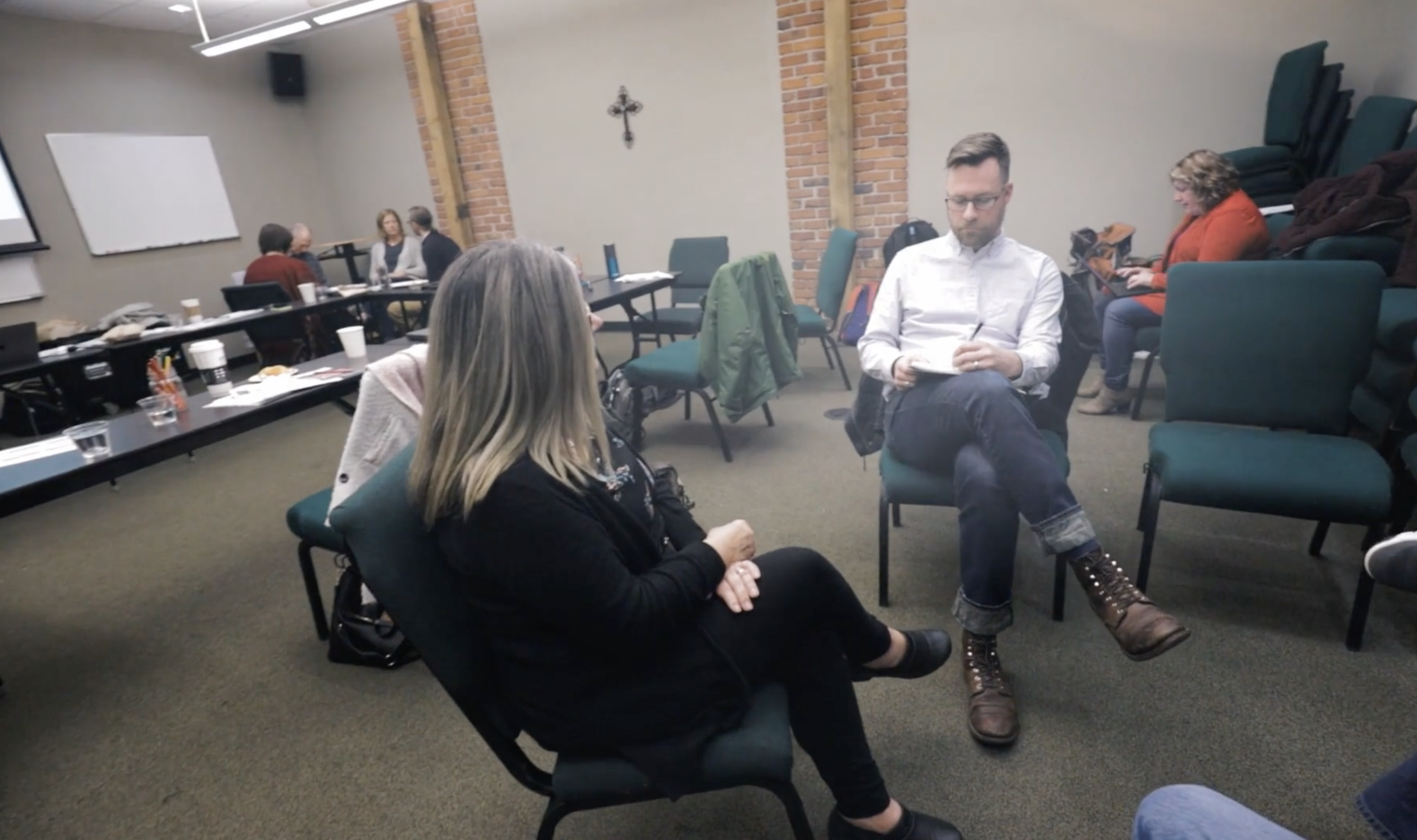
Our praxis curriculum is robust, substantial, embodied learning. It’s designed to develop a whole being listening posture and a priestly presence. A priest helps people to remember, to draw back what was important.
Dr. Doug Shirley, Assistant Professor of Counseling
My hope is that we have such a depth of our identity that we can handle that other people have a difference of opinion with us, and we can have real dialogue, and when those apocalyptic moments happen, we are grounded enough that we remain where we are. We can always grow. We can always change. But we know where we belong.
Dr. Chelle Stearns, Associate Professor of Theology
We’re designing this such that there will be discourse and interdisciplinary inquiry simply because there will be multiple perspectives and subject matter experts up front. For example, students will hear from a theologian and a psychologist as we talk about a topic like trauma.
Dr. Doug Shirley, Assistant Professor of Counseling
Ready for the next step?
Connect with us! Request more information or apply today, and we’ll send you everything you need to know to begin your journey.