

At the beginning of every academic year, a phrase stirs throughout the physical halls, virtual classrooms, faculty meetings, and alumni chapters of The Seattle School as new students prepare for one of its most core and storied programmatic features called Listening Lab: This is The Seattle School’s secret sauce.
Reverence and nostalgia both informed the truths behind this sentiment. Listening Lab has long held the prestige as the primary venue for The Seattle School students to find themselves as they train to become therapists, theologians, and other practitioners. Alumni even reflect on their experiences in Listening Lab with a folkloric kind of gravitas, recounting moments that felt alive, disruptive, evocative, perhaps even transformative. For many of us, including myself, Listening Lab shaped not only how we learned to listen but also how we came to know ourselves in the process.
This folkloric secret sauce was an endearing way to invite incoming students into the mystique of The Seattle School’s formation process. It reinforced a myth about the type of experiences students would come to expect upon the start of their graduate school careers. Yet the truths behind folklore can be difficult to sustain, and myths equally challenging to duplicate with consistent results. Fast-forward to this moment in our broader cultural context when relational breakdown is no longer an anomaly but a feature of our current social fabric, and the limits of the secret-sauce myth become difficult to ignore.
Being honest with ourselves, the polarization, relational rupture, institutional distrust, and chronic reactivity that characterize these times have made the idea of concocting some secret sauce as a remedy feel out of touch with the very real cries of our hurting world. But Listening Lab has adapted over the years to reflect these challenges. I want to suggest that these shifts reflect its maturation into a more durable organism than previous forms. These shifts did not happen in a vacuum but rather are responses to the contexts that students inhabit upon enrolling at The Seattle School and to the fractured world that awaits them.
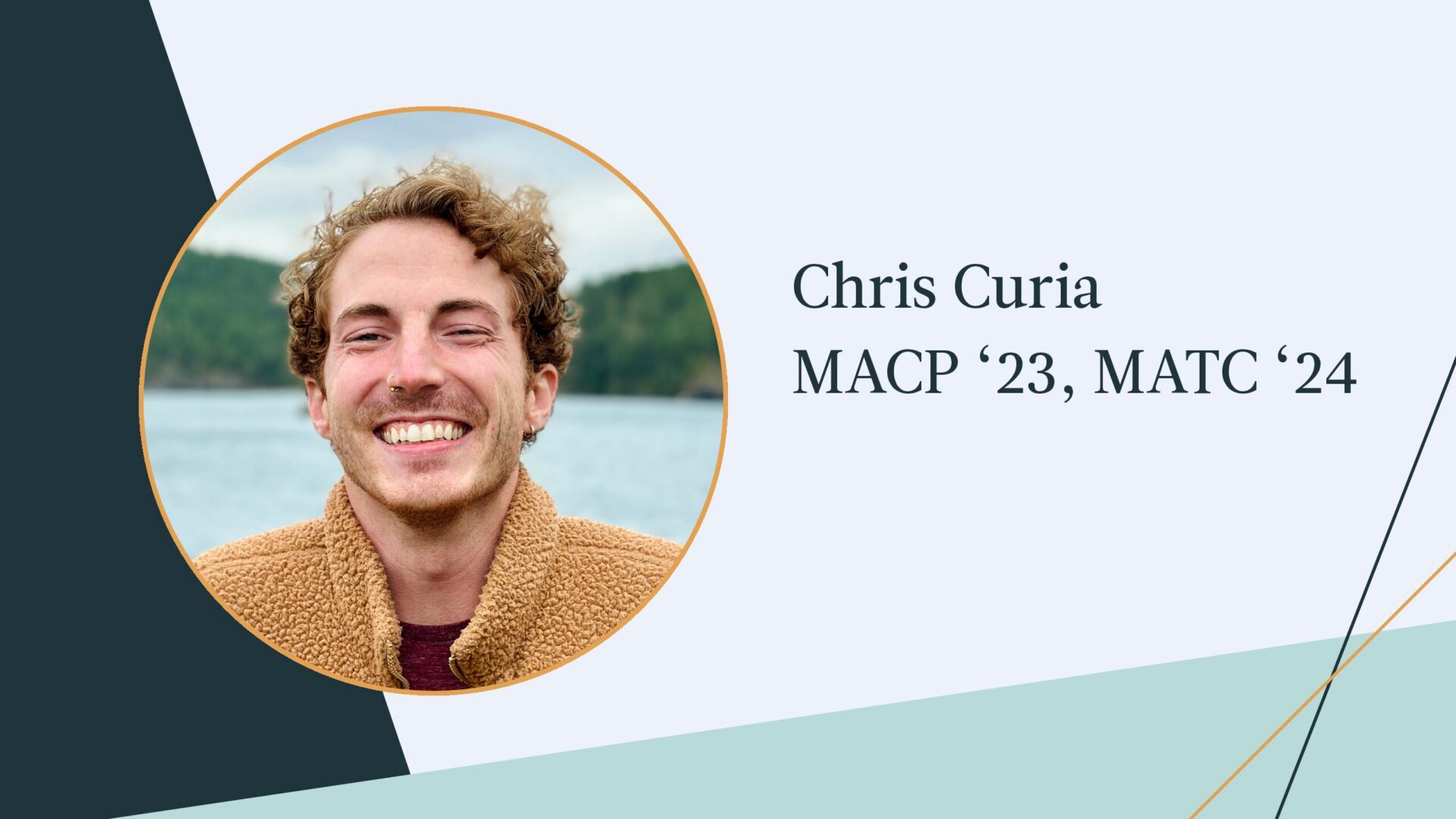
Now, I write as someone transformed by Listening Lab in its earlier iterations and as a former member of The Seattle School’s Instructional Staff. But I also share my reflections from my experience as an extern who spent the previous academic year observing the updated model from within. Revisiting Listening Lab gave me a deep appreciation for the intention behind what its leaders have preserved and clarified and what they are intentionally leaving behind. In fact, the shifts I witnessed firsthand indicate a loosening of The Seattle School’s grip on developing a mythic secret sauce to more effectively equip students to understand their best tool for mending our hurting world: themselves.
Reimagining the Learning Container
At first glance, Listening Lab’s current course description reads pretty straightforward. Over two terms, students will cultivate their listening postures by attending to what psychoanalyst Jeffrey Eaton calls the data of their experience. This conceptualization of a listening posture transpires at three levels: intrapsychic (within), interpersonal (between), and group-as-a-whole (beyond). Integrating this approach with Senior Scholar Esther Meek’s ideas on epistemology—how we know what we think we know—reinforces just how important it is for students to develop an open-minded posture toward their listening processes. Put plainly, Listening Lab teaches students that their attunement to what happens within them is their primary access to understanding someone else’s experiences. Students enact these skills in sections alongside 10-15 peers, facilitated by a Listening Lab leader who guides them in learning to prioritize curiosity over certainty and relationship over expertise.
Due to these experiential features and intimate class sizes, Listening Lab’s earlier iterations sometimes functioned—often unintentionally—as quasi-group therapy. Classrooms radiated with highly charged emotional material as students took their first steps in practicing when to share and how to listen. They applied listening skills without sufficient training on how to use them and exchanged real-time feedback on how they did with one another. Sometimes, this formula could be a recipe for success. However, outcomes varied widely because so much depended on group buy-in and the leader’s ability to facilitate effective learning with, put frankly, emotionally radioactive material. The only consistency was that each section was a high-risk, high-reward scenario.
So, Listening Lab leaders got together and redesigned the curriculum in response. They modified course content to create more consistency across sections, stabilizing the unpredictable emotional charge that could occur in the classroom while mirroring the needs of an increasingly volatile social landscape. As a result, clearer guardrails, more explicit role differentiation, and a stronger distinction between pedagogy and personal growth became the key ingredients to creating a more cohesive learning experience.
Listening Lab no longer tasks students with evaluating one another using tools they are learning simultaneously. Instead, their leaders invite them to stay with the experience of noticing and articulating what it means to listen to themselves and each other. These and other subtle programmatic shifts enable instructors to steward the classroom container more effectively than carrying the course through improvisation or personality. Now, depth and structure are not mutually exclusive in a format that reinforces The Seattle School’s commitment to cultivating suitable conditions for formative learning. In that sense, Listening Lab moves away from pedagogy dependent on instability toward a solid learning container with more consistent outcomes across sections.
A Parallel Pedagogy
In psychodynamic training, the concept of parallel process articulates how relational patterns replicate across levels of a system: between client and clinician, clinician and supervisor, and across broader social structures. What has been striking to observe throughout Listening Lab’s current iteration is how intentionally its pedagogy prioritizes these levels of engagement.
The curriculum constantly invites students to listen to themselves listening to each other and to attend to their felt sense of the present moment—including confusion and uncertainty—before rushing into meaning-making. Little do students know that their Listening Lab leaders also meet regularly to reflect on what emerges across sections. Crucial to the curriculum’s success is that instructors embody the posture they hope to teach students. Even my role as an extern included participating in classroom discussions, regular debriefs with students and the instructor, and writing a reflexive journal to track the raw data of my experience.
In Listening Lab, the content is the process. This pedagogical approach prioritizes treating discomfort—within the interwoven relational contexts of self, others, and community—as material for gaining insight rather than as a complex problem to solve. It invites students to attune to their felt sense of themselves within a relational frame that is the classroom experience.
Formation, then, happens not through magic or spectacle, but through intention, reflection, repetition, and repair. These are essential traits of developing a deep listening posture in a world with so many social structures bent on tightening control, flattening ambiguity, and short-changing necessary meaning-making processes along the way.
The Gift of Less Edgy
One byproduct of Listening Lab’s maturation is its decreased volatility, which some may critique as “losing its teeth” or “feeling less exciting” than the secret-sauce version. As someone enrolled in Listening Lab under the previous model, I can recognize that the edge was alluring and, at times, effective. But the learning environment I observed during my externship was noticeably calmer and more focused on students repeatedly practicing their listening skills than when I was a student, and that’s for the better.
Consider how jazz improvisation, which might appear effortless, takes years of disciplined attention to scales, form, and, yes, listening to each other across difference. Without that foundational groundwork, freedom would collapse into cacophony, and fights would ensue between performers about whose musicianship outshines the other, losing the music in the process.
Listening Lab’s more settled structure softens this improvisational edge in support of skill formation in a learning space that is not performative but sturdy enough for insights to emerge. Students can be less concerned with demonstrating the best listening skills or parroting their favorite instructor’s techniques because the updated curriculum encourages them to develop their own postures so their inner music can naturally flow through them. These subtle yet decisive shifts empower students to trust themselves.
Additionally, Listening Lab’s updated structure strengthens the institution’s obligation to help gatekeep the helping professions. The fact is that not every student demonstrates a listening posture that is competent or ethical from the outset. Naming that reality and responding with care and more consistent evaluative tools are crucial acts of stewardship across disciplines, among learners, and for the communities they intend to serve. Less edgy helpers and healers are usually more effective in the long run.
Listening is a Transformative Process
Ultimately, I believe that what distinguishes The Seattle School’s approach is its insistence that listening is not merely a skill to master, but an embodied way of being that we cultivate over time. My experiences in professional settings beyond The Seattle School often remind me how unusual this emphasis remains. The helping and healing professions operate in times, spaces, and situations that invite more urgent reactivity than thoughtful response. These conditions prime us to attend to everything else—from diagnostic criteria and risk assessments to damage control and budgetary constraints—without paying attention to our felt sense with the person or people we serve. That means losing sight of the cornerstone of listening, the catalyst of transformation: ourselves.
In these moments, my Listening Lab experiences return me again and again to the notion that listening to yourself listening is a radical starting point to mending our fragmented world. We cannot lose ourselves along the path of transformation. Listening Lab leaders underscore this point throughout the curriculum, including the shift from the secret-sauce language to a more mature nickname: signature pedagogy. If Listening Lab really is The Seattle School’s pedagogical contribution, where interpersonal theory and practice converge, then it’s also a training ground of being that abides in the enduring belief that healing is just as possible for you and for our world as it is for me.
My Listening Lab experience as a student was years ago, and my externship concluded months ago. However, one final thought has stayed with me from my reflections on the old and the new: Transforming relationships are still the solution we offer back to the world. When I say solution, I do not imply an answer to a problem but a material reconfiguration that happens in relationship. I am no chemist, but my limited understanding is that when a solute permeates a solvent, a necessary loosening occurs to enable molecular change. So, transforming relationships functions as a solute introduced into a fractured relational solvent. That is the solution—a change to the compound to stabilize its volatility, make it more resilient, and hold complexity and empathy across difference, all without breaking. In short, transformative relationships are how the organism evolves.
Listening Lab does not offer a secret sauce that students apply as a mere balm to fragmentation. At its best, it stewards a transformational process capable of, in the spirit of Dr. Paul and Billie Hoard, contaminating the entire organism by fundamentally altering its relational chemistry for the better. If this signature pedagogy equips students with the skills needed to cultivate their listening postures in response to a fragmented world, then it will be the solution needed to meet this moment and the next.
New students who set foot in their Listening Lab sections later this academic year can anticipate a more grounded experience of disruption and transformation than mine. If that is you, this shift marks less an ending of something old and more an invitation into something new so you, too, can more fully participate in the formative process of becoming more and more yourself. In a world aching from relational rupture, this could be the most faithful solution you will offer.