
Master of Arts in Theology & Culture: Chaplaincy
Spiritual Care Is a Vocation. We’ll Help You Build One.
The MATC: Chaplaincy specialization prepares students for vocational ministries of spiritual care in settings such as healthcare, hospice, the military, corrections, education, and nonprofits. Designed with professional chaplaincy pathways in mind, the program builds the competencies, formation, and supervised practice needed for contemporary spiritual care work.
Chaplains accompany people through suffering, crisis, transition, and meaning-making. Rooted in Christian tradition but practiced in pluralistic settings, this work demands deep listening, compassionate presence, ethical attentiveness, and theological reflection. Students develop the relational, theological, and interpretive skills to offer spiritual care that is both contextually responsive and vocationally grounded.
Through reflective practice and supervised formation, students build the self-awareness, resilience, and vocational clarity needed for sustainable ministry.
The Seattle School’s psychologically informed approach equips graduates to serve with depth, wisdom, and adaptability across diverse settings—making this program well-suited for those pursuing chaplaincy, community ministry, nonprofit leadership, or other vocations centered on presence and relational care.
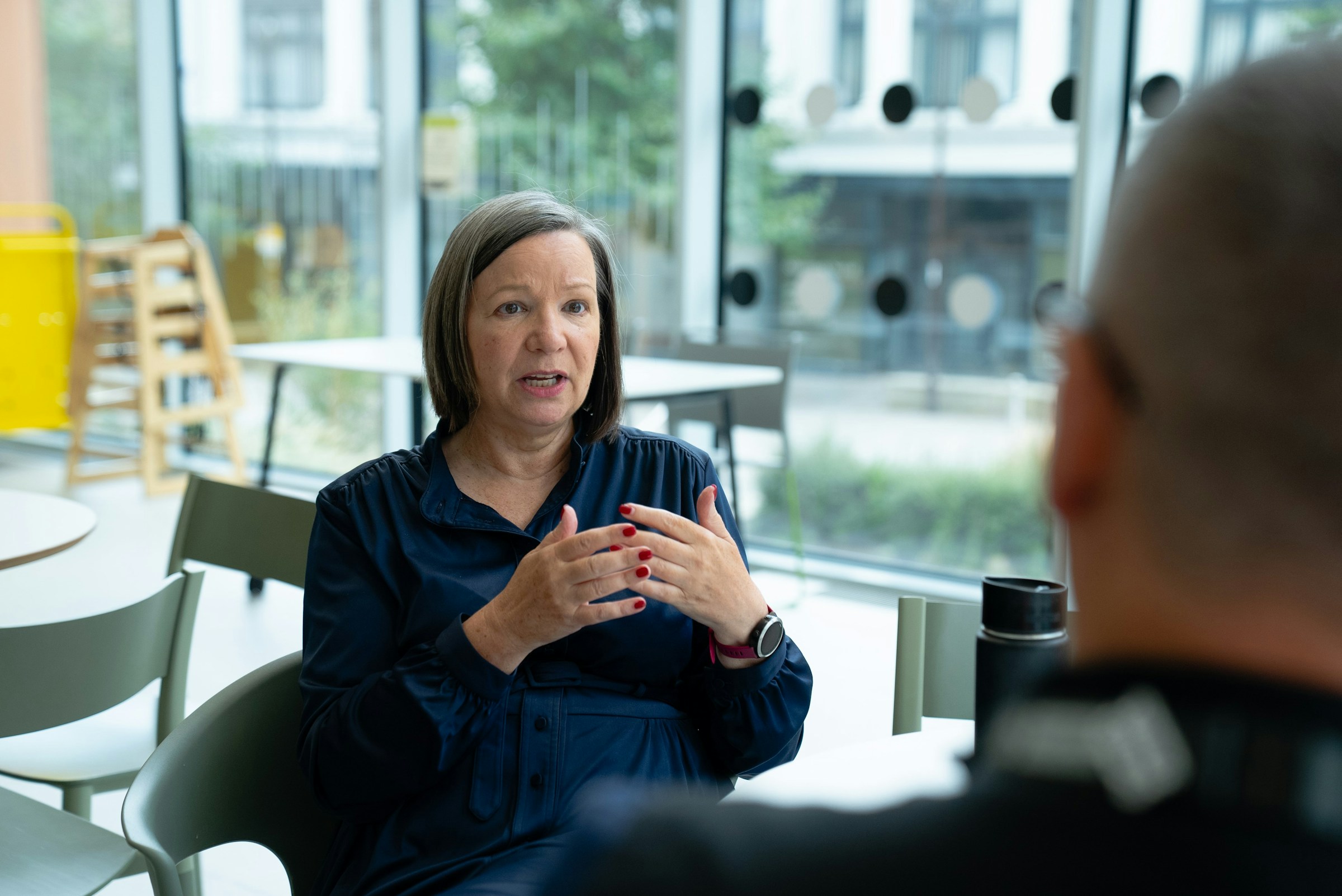
Chaplains show up where people need presence most. This program gives you the theological grounding, clinical formation, and supervised practice to do that work with depth and sustainability.
“You need to become a student of who you are so that you can become self-aware… the work is working internally, and being steady.”
Vanessa
Hospice and Palliative Care Chaplain Meet Our Core Faculty

The Curriculum
All MATC students begin with a shared Common Curriculum, building a foundation in theology, psychology, biblical studies, and culture. In your second year, you'll specialize further through coursework and hands-on learning shaped by the practice of chaplaincy, preparing you to offer spiritual care in hospitals, hospices, the military, schools, and other institutional settings.
You’ll explore questions like:
- What does compassionate presence have to say in the face of profound suffering?
- How do chaplains hold hope and offer meaning-making when people encounter crisis, trauma, and grief?
- How can spiritual care disrupt systems of harm?
- How do chaplains act as advocates, agents of peace, and companions who call communities toward collective healing?
Your Coursework Includes:
- Chaplaincy specialization courses delivered in partnership with the Center for Chaplaincy Studies. A pre-CPE apprenticeship is built into the degree, and students finish with a capstone integrative project built around reflective listening and a personal self-care and resiliency plan.
- Listening Lab: Inviting the deep integration of theological reflection with the hands-on practice of spiritual care.
- Special topics in public theology: Exploring crisis response, trauma-informed care, and chaplaincy within diverse, pluralistic, and institutional settings.
The Ministry of Presence: Every assignment across this program is crafted to help you practice theology through your most vital tool: yourself. You will learn to bring grounding, empathetic presence to wherever you are called, whether that is a hospital bedside, a military unit, a correctional facility, a corporate office, or a community in crisis.
Board Certification Standards
The Master of Arts in Theology & Culture: Chaplaincy specialization is designed to provide strong theological formation and preparation for ministries of spiritual care.
Students who intend to pursue board-certified chaplaincy or positions requiring an MDiv should consult the requirements of the relevant certifying organizations or employing institutions. Certain professional chaplaincy roles – particularly those leading toward board certification through organizations such as APC (Association of Professional Chaplains), NACC (National Association of Catholic Chaplains), or Military chaplaincy – may have different requirements and students should verify credentialing requirements before enrolling.
Partnership with The Center for Chaplaincy Studies
The Center for Chaplaincy Studies is a hub for transformative education and professional development in spiritual care and chaplaincy.
Rooted in a commitment to nurture courageous, compassionate, and creative leaders, they serve individuals and organizations dedicated to providing care in trauma-impacted communities. The Center for Chaplaincy Studies partners with theological institutions, congregations, and community organizations to expand access to high-quality, adaptive learning opportunities. Because of this partnership, students will further integrate conventional theological study with practical, real-world applications, ensuring that chaplains are prepared to meet the challenges of today’s spiritual care environments.
“I felt like [the Common Curriculum] was a good way to learn about each other, practice active listening, and dive deep into our cultural contexts.”
MATC Student Explore MATC Voices

What you’ll learn
In this program, you will:
- Integrate theological reflection with your practice of spiritual care
- Explore how compassionate presence can disrupt injustice and point toward collective liberation
- Discover how deep listening and human connection can be a form of sacred encounter
- Cultivate spiritual depth for a more resilient and sustainable life of caregiving
- Develop your distinct pastoral identity as a caregiver rooted in faith, justice, and transformative hope
By the end of the MATC: Chaplaincy specialization, you will be equipped to:
- Articulate insight into formative stories to embody a vocation reflecting one’s understanding of God, self, and neighbor
- Apply diverse approaches to scripture and theology that foster courage, imagination, and action
- Listen deeply and responsively to human and ecological communities to discern God’s movement among them
- Offer compassionate, culturally humble spiritual care to individuals and communities in crisis, transition, and meaning-making
- Integrate theological reflection and chaplaincy competencies in institutional settings, collaborating with teams while practicing self-awareness and self-care
Download a Program Packet